Translate

Wednesday, October 1, 2014

A student, an intern and life as a local in Brussels

Shamica Shim wrote to us on her culturally-rich experience in Brussels, Belgium this past summer. Shamica is quite the achiever: she will graduate in 2015 with a double major in Political Science and Eastern Literature and Language-Chinese, minors in International Development and Humanitarian Assistance and European Union Studies, and a certificate in International Relations. She was one of fifteen UF undergraduate students enrolled in the Center's UF in Brussels study abroad program. Here are her experiences as a student, an intern, and a local in Brussels:
 
Brussels was an amazing place. It has such a laid back, yet rambunctious atmosphere.  It was easy to meet a number of people who worked for different European Union institutions because many of them hung out at local bars after work. So, I had a great opportunity to get firsthand experience of their role in their respective institutions. One of the things I love most about Brussels was that I met people from all over the world. It was one of the most culturally diverse places I have ever been to.  Some of the people, who I ‘m now able to call friends, were from Indonesia, Congo, Mozambique, and Zambia. Through their experiences, I learned a lot about their culture and family life.  The school I attended in Brussels was Vesalius College (VeCo), which is the international school of Vrije Universiteit Brussels. The classes there were similar to that of my own university (University of Florida). The class sizes were much smaller than UF, but they were, similarly, instructor-led. Some of my classmates were able to study under prestigious professors, whose experience in their field was very extensive.  My class took field trips to many of the EU institutions, listened to presentations from staff members, and toured the facilities. I enjoyed visiting the European Parliament the most because it reminded me a lot of the United States Congress.  Here is a picture of my class- both Vesalius and UF students- taken at the European Commission. 


I didn’t have the opportunity to travel as much as my classmates did because I was interning for the European Cooperative for Rural Development  (EUCORD). It was an interesting internship to say the least. I’ve done internships prior to going Brussels and they were more hands-on, workload heavy and stricter than EUCORD.  So, it took a while to get used to the ideas of being assigned work only when needed. Some days I did nothing and other days I was very busy, but, for the most part, a majority of what I learned about the organization was from my own research. One task I worked on for a while was one I suggested to my advisor. Because EUCORD worked on agricultural development in underdeveloped countries in Africa, I suggested conducting research on China’s role in African development. This research opened the door to EUCORD’s exploration of working with South African and Chinese development agencies to progress African development.
 
One maybe not so important thing to note is I was also in Brussels during the World Cup. It was interesting to participate in an important part of culture, not only for Europeans, but for Latin Americans as well. I had a lot of fun cheering for Belgium (except when they played against the US) and seeing how Belgians celebrated after making goals and winning games. Overall, I truly enjoyed my experience in Brussels and I would recommend it to any first-time and experienced travelers. (Picture below is of some of my classmates, VeCo friends and I celebrating Belgium’s victory in one of its matches.)

Wednesday, September 24, 2014

A Fulbright in Hungary

Happy fall, Gainesville! It certainly felt like fall this morning, where the temperature did not hover above 70 degrees and I could finally don both sweater and smile on my two-and-a-half-mile bicycle trek to campus. "This is what it's like to feel comfortable," our own Jim Robbins said of the weather as I cheerfully, with a cinnamon pastry in hand, opened my inbox to discover a blog entry from Budapest. The author, Johanna Mellis, is no stranger to the CES Euro Gator blog, in fact she wrote to us last Summer as a FLAS recipient: http://ceseurogator.blogspot.com/2013/07/hungary-in-summer-flooded-danube.html
In the entry below, Johanna shares her adventures in Budapest, Szentendre and Visegrád as a Fulbright student. We are very pleased to get this account first-hand from Johanna, a UF Modern European History graduate student, who has achieved this widely-coveted Fulbright award.

Hello everyone! I was extremely fortunate to have received one of seven Fulbright IIE Student Grants to Hungary, enabling me to spend the 2014-2015 academic year in my all-time favorite city: Budapest. Moreover, my partner-in-crime and husband Greg Mason (another history PhD student), is accompanying me on this journey-of-a-lifetime too. CES has played a huge  role in affording me this opportunity. While learning Hungarian has not been easy I am so fortunate to attend one of the few universities in the country that teaches the language. In addition to the Hungarian language and history courses that I took on campus through CES I have also been able to take intensive summer language courses in Budapest by way of the FLAS fellowship. 
For my dissertation I am analyzing the role of elite sport and top-level Hungarian athletes in Hungarian Communist society. I study the athletes’ experiences and everyday motivations in light of several dynamics: their unique status-related opportunities, relative gender equality (for female athletes), and the athletes’ vital position in the Hungarian state’s sport diplomacy goals vis-à-vis both Western and Eastern Bloc countries. I am also interested in the politics of memory. More specifically, I examine how elite athletes and sports’ officials from this period conceptualize and remember their experiences under communism in today’s climate. This second focus places oral history at the center of my research, in addition the archival work I will be doing. And as I always tell people, who doesn’t like to hear stories about the “good ole days” from former sports’ heroes?
Before beginning the research, however, the Fulbright Committee here in Hungary treated the other Fulbrighters and me to an incredible orientation week. The orientation was both useful and entertaining. The lectures ranged from a history of Hungarian music (Hungary has a very rich music tradition) to a lively round table and debate about current Hungarian politics. The most enjoyable part of orientation lay in the excursions to Szentendre and Visegrád, replete with private tours. Szentendre is a small town north of Budapest known for its museums, galleries, and artists. Its history reflects the larger historical trends of Central European history: it was initially full of Serbians who fled the Turkish invasion and German Swabians who migrated there under Maria Theresa’s reign. Most of these inhabitants, however, were forcibly expelled after World War II. The town’s current Hungarian residents have successfully maintained its artistic nature, and it was a lovely place to visit.
Visegrád lays claim to an entirely different history and character. Situated on a high hill further north of the capitol city, several successive medieval Hungarian kings made the town their home beginning in the 1300s. King Charles Robert (Károly Róbert) made Visegrád famous by hosting a two-month conference there in 1335. He invited the Bohemian and Polish kings of the time in order to establish an alliance against the Habsburgs (note: the “Visegrád” tradition continues today: the post-communist leaders of Hungary, Czechoslovakia, and Poland met here in 1991). After being destroyed by the Turkish invasions in the mid-16th century, excavations began on it in 1934 and it is a must-see place to see today. We enjoyed fantastic views of the Danube, and were treated to detailed tours of the kings’ old bedrooms and jousting facilities. We finished the day with a welcome shot of pálinka (Hungarian brandy), medieval drum and horn music, and a delicious dinner at Renaissance Restaurant. To top it off, they offered us costumes and wine in fancy goblets to accompany the food. Who could resist either one?
Now that orientation is over, it is time to get down to work. Lucky for me, Hungarians adore their past and current elite athletes. More on that and my ongoing research in my next blog post!

Wednesday, August 13, 2014

"Mebbe it's Aye, Mebbe it's Naw...": The Scottish Referendum

In yet another act of "lovebombing", this time set to Queen's 'You're my Best Friend', the Let's Stay Together campaign turns their lenses to the UK-everyman, urging Scotland to "keep the kingdom united," lest many hearts break. Yes Scotland, an independence campaign, stated in response to Let's Stay Together, “It’s great to know that Scotland has so many friends and admirers, and we know they will all continue to be our friends and admirers after we vote yes on Sept. 18."

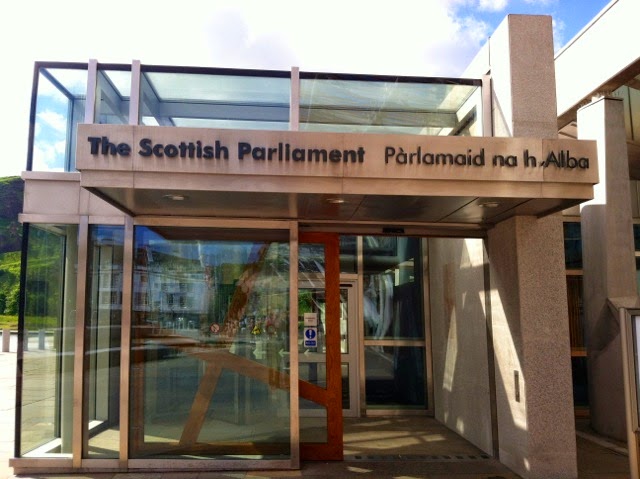
Weeks before September 18, 2014, the day that Scotland officially votes yes or no to independence, our own graduate student, Ross Cotton, returned from Edinburgh where he pursued pre-dissertation research on a CES Travel Grant. His dissertation is a comparative analysis of the Scottish National Party and Part Quebecois, two separatist political parties pursuing independence for their nations via peaceful, democratic means. He writes on his investigation of the Scottish Case in Edinburgh below.

The research I conducted in Edinburgh, Scotland this summer has provided me a deep understanding of the forces that have contributed to the current debate over Scottish independence, and in turn, given me the analytic depth to understand the result of the referendum once it occurs on September 18 of this year. I spent the majority of June at the Scottish Parliament interviewing MSPs (Members of Scottish Parliament) from both sides of the independence debate and every political party currently holding seats in the parliament. I interviewed nearly a quarter of the MSPs in Parliament, and learned much from my conversations with them.

The month of July was spent speaking with people from outwith parliament involved in the independence debate. I spoke with members of Yes Scotland (the umbrella organization that is pro-Scottish independence and constituted by the Scottish National Party, the Scottish Green Party, and the Scottish Socialist Party), canvassed with a local Edinburgh chapter, and attended several local events put on by organizers.


Speaking with Better Together (the umbrella organization that is anti-Scottish independence and constituted by the three main Westminster parties, Labour, Conservative, and Liberal Democrat) proved more difficult, as they did not seem to be eager to speak with me.


Nonetheless, the month of July was very exciting and allowed me to view a side of the independence debate that was very different than what I had experienced at the Scottish Parliament; particularly in regards to the vibrant grassroots movement than characterizes Yes Scotland, and the multitude of organizers who are not involved with the Scottish National Party as members or voters, and are campaigning for an independent Scotland for reasons separate to that of the Scottish National Party. Thus, my research this summer was invaluable to my understanding of what is currently taking place in Scotland, and will pay incredible dividends towards my dissertation.

Thursday, July 17, 2014

A Stint in Budapest

Christopher Vandemark, an undergraduate student here at the University of Florida, as well as our ardent coordinator at the American Hungarian Educators Association conference this past May, was awarded a Summer travel grant from the Center to assist with his thesis research in Budapest, Hungary. He reports to us his experiences below:
    
Thanks to the travel grant afforded me by the Center for European Studies, I had the opportunity to research for my undergraduate thesis on nineteenth-century Hungarian history in Budapest. The academics and young people that I met with on the trip were instrumental in helping me crystallize a topic that suited my scholarly interests. In addition, meeting with historians who share my fascination with Hungarian aesthetics equipped me with invaluable resources that would not have otherwise been available to me in the States.  
Perhaps the most exciting aspect of my trip to Hungary was the opportunity to meet with Simonovics Ildikó, curator of the Kicselli Museum in Budapest, and a prominent Hungarian fashion historian. With her guidance, I was able to locate an abundance of primary source material, including issues of Pesti Divatlap, a famous fashion publication from the middle of the nineteenth century. Working through the publications with which I was provided, primarily by Dr. Simonovics, I have chosen to write my thesis on Hungarian fashion as an instrument of passive resistance against the Habsburgs in the middle portion of the nineteenth century. The failed revolution of 1848 proffered an opportunity for subjugated populations of Hungarian society, namely women, to participate in the movement against Austrian supremacy. Using these publications as a guide, I hope to compose a paper which highlights the intersections between nationalism and aesthetics as a means of feminine empowerment.      
While the bulk of my trip was spent researching and meeting with various academics, I made time to enjoy the youth culture of Budapest in an effort to, not only have a good time abroad, but to improve my Hungarian language skills. I met so many fascinating, friendly individuals at the plethora of ruin pubs, bars, and clubs that line Budapest’s party district. As a college student, the connections I made in these clubs were probably the most memorable part of my visit. Meeting people from across the globe, and swapping stories about our experiences abroad was unforgettable.
I am grateful to have had the opportunity to the visit the city that I have read so much about over the course of my studies; in a sense, it was like putting a face to the name of pen pal you’ve been communicating with back and forth for years. Without a doubt, my thesis will be of a much higher quality because of this journey, due to the primary sources I collected, as well as the people, both my peers and academic superiors, with whom I was able to spend time with.

*CES travel grants are open to all UF graduate students regardless of discipline as long as the subject of the research or talk is related to contemporary Europe (i.e. it is not sufficient that the trip takes place in Europe, it must be about contemporary Europe, broadly defined). Follow the link here for more information: http://sites.clas.ufl.edu/ces/fellowships-2/student-fellowships/graduate-student-travel-grants/

Tuesday, June 17, 2014

An Oral History Exhibit

We were honored to win the support of the Delegation of the European Union to the United States this year. Together with Eastside High School's IB students and the Samuel Proctor Oral History Program (SPOHP), the Center was able to burgeon a rare Historical and visual experience, the 'Getting to Know You' oral history exhibit. In it, Eastside students appended a colorful context to the Historical narratives of Europeans who now live in Gainesville. They conducted video interviews with SPOHP's counsel, painted and photographed, and exhibited their work in the Thomas Center Mezzanine Gallery. Below are some photos from the exhibit opening:


Dr. Freifeld mingles with the group


We are happy to say the oral history exhibit is free and open for the public to view from Monday-Friday: 8 a.m.-5 p.m. until Saturday, June 21st, at 4pm.  Do try to make it out for this unique experience! If you're not in Gainesville proper, videos are available to view on Eastside's IB Oral History Project website: http://eastside.sbac.edu/pages/EHS0421/5130169170831539170/IB_Program/IB_Oral_History_Project

Thursday, June 5, 2014

The CES offers an annual competition for student and faculty travel grants. This past Spring, we awarded multiple grants of up to $1,000 to assist those avidly pursuing their research, and/or presenting work at a scholarly conference or workshop.  Ana María Díaz Collazos, PhD in Hispanic Linguistics, was one of our grantees, and wrote to us on her unique experience in America's Dairyland:


Travel Report


            I attended a conference called 7th International Workshop on Spanish Sociolinguistics, which took place in Madison, Wisconsin, on April 3-5. I arrived one day before it started and left one day after. I stayed four nights in the conference hotel. My presentation was scheduled for Saturday, april 5th, at 11:00 a.m., which was entitled “Pronouns of Courtesy between Angels and Demons in Colonial Hispanic America: Social or Spiritual Forces?” I also chaired a panel entitled “Subject Expression,” Friday, April 4th, at 9:00 to 10:30. Beyond these fixed commitments, I participated actively during the three days of schedule by attending to the panels and asking questions or making comments. This allowed me to meet many potential employees.
            Among the presentations I attended, I had the opportunity to learn about the existence of many varieties of Spanish in contact with other languages. For example, there are many English-based Creole languages in Central America, as I learned from the presentation by Ashley LaBoda on the Limonese Creole in Costa Rica (April 3rd). There is also a community of Mennonites who migrated from Paraguay to Canada who blend Spanish, English and a Germanic dialect already disappeared from Germany (April 4th).  In the session I chaired, there was an important professor whose name is Ana Maria Carvalho, who shared her recent research on Spanish in contact with Portuguese in the Uruguayan border with Brazil. I also attended a session on language ideologies in Spain, where the speakers highlighted the increasing prestige of traditionally marginalized languages such as Galician or Catalan (April 5th). One of the keynote speakers, Sally Tagliamonte, spoke about the most recent trends in quantitative methods for sociolinguistic research. Her presentation was very interesting and useful to plan methodologically my future research.
I was able to interact socially with Irene Moyna, who is editing a volume for which I will contribute a chapter. She introduced me to some other professors and potential employees. I presented a topic related to my contribution for the book, which has to do with the usage of terms of address in authors of Spanish descent in Hispanic America. They were three authors who wrote mystical poetry in 1561, 1650 and 1703. In their poetry, they take advantage of archaic meanings of Spanish second person pronouns to represent the speech of supernatural entities acting as characters of their books. In Spanish there three second person pronouns in the singular. Each of them signals the intrinsic power in every relationship. Thus, the attribution of certain pronouns to angels or demons implies a perception of power as a fixed, unchangeable structure. I received interesting feedback from the audience. For example, that it would be good to explore the lives of these authors to discover the literary works they had access to. In this way, I would enrich the analysis by showing the literary paths of transmission for these archaic usages of pronouns.
My talk was part of a panel related to terms of address organized by Irene Moyne. This panel took place in the morning of April 5th. I attended all other presentations of the panel and obtained an invaluable amount of information on the newest trends in research on terms of address. I had the possibility to network with these researchers, who are also contributors to the volume to be edited by Irene Moyna. This was a unique opportunity to increase my network in a sensitive period of my career as is transition from a Ph.D. student to a professor in my last year of studies. The travel grant from the Center for European Studies made it possible.


We currently have students and faculty in Budapest, Moscow, Poland, Brussels (to name a few). Keep your eyes peeled for their reports when they're writing on our stomping grounds again.


*CES travel grants are open to all UF graduate students regardless of discipline as long as the subject of the research or talk is related to contemporary Europe (i.e. it is not sufficient that the trip takes place in Europe, it must be about contemporary Europe, broadly defined). Follow the link here for more information: http://sites.clas.ufl.edu/ces/fellowships-2/student-fellowships/graduate-student-travel-grants/

Tuesday, May 27, 2014

Updates

When the flurry of Spring turns to Summer semester the day after Memorial Day, it has one not forging forward but first, reflecting back. Indeed the promised art exhibits, oral history exhibits, Viva Europe! festival, conferences and Spring panels all happened. In fact we had five events in January alone. To name a few, our beloved Anna Muller, who now teaches at the University of Michigan, returned to us mid-January to give the fascinating talk, "Mother Solidarity: Anna Walentynowicz's Path to Opposition - An Exercise in Memory Studies." To close out this graupeling month we, in conjunction with the Center for Women's Studies and Gender Research, had a film screening of the documentary called "In the Name of Love: Mail Order Brides" at The Wooly in downtown Gainesville.

In February we managed to hire our new office manager, Cecilia Greco, UF alumna and CES enthusiast, who conceded to move from the simpering grip of Chiberia and shortly thereafter, comfortable at her newly darned desk (thanks to our CES toolkit), established our first-ever Twitter page, https://twitter.com/UFCES.

In the mix, revolution gripped Ukraine, and we invited scholars to bid us new perspectives on the Ukrainian situation at our "Ukraine, Russia, and the European Union: Legacies of the Past" panel in March. One among the panel is the pictured Keith Darden, a quizzical Political Scientist from American University.

Keith Darden
In April after the sights and sounds of Viva Europe! flickered in Bo Diddley Plaza, Valerie Sperling's talk "Sex, Politics, and Putin" garnered much attention at UF. Such was particularly true in the flyer department, where some mysterious soul set to dressing Putin proper for the event:
Before
After
The Ukrainian situation has since stabilized and, from the eve of Presidential elections this past May 24th, Chocolate Putins (hand-over-heart, bomb behind) fly off the shelves in Lviv.


The final reflection-cajoled update plods to the present with mention of the "Getting to Know You: Our Neighbors of European Heritage" oral history exhibit, which opened in May and will be housed at the Thomas Center until June 21st, 2014

A moving video compilation put together by Eastside High School students and the Samuel Proctor Oral History Program for "Getting to Know You: Our Neighbors of European Heritage" is available to view here: https://www.youtube.com/watch?v=TeBmMpuvPxo. As is Eastside High's index of individual interviews: http://eastside.sbac.edu/pages/EHS0421/5130169170831539170/IB_Program/IB_Oral_History_Project.

Alas, we conclude this post-Memorial Day update with Cecilia's avowal to resurrect this blog and keep us all in loop with CES news through the Summer. Until next time, friends.